

 Apple Podcasts
 Spotify
 Castro
 RSS Feed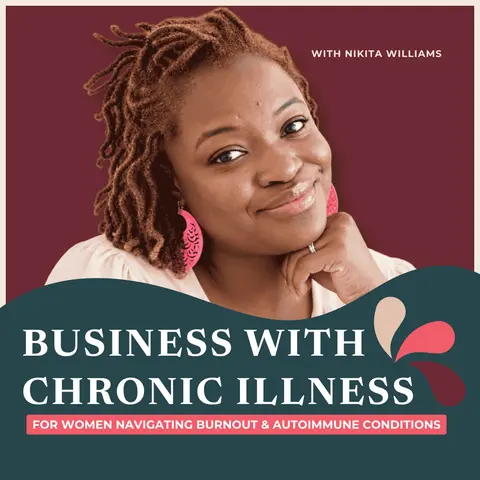

If your marketing only works when you are actively showing up, posting, creating, and being visible, then every time your capacity changes, your marketing will slow down too. That is the reality for most women building businesses while living with chronic illness, navigating burnout, or simply trying to create space for the rest of their lives. And the answer is not to do more. The answer is to build a marketing system that keeps working even when you need to step back.
In this episode, I am answering one question that will completely shift how you think about your podcast, your social media, and your entire marketing strategy: Is your podcast actually growing your business, or is it just giving you more content to make? And if you do not have a podcast yet, this question still applies to whatever platform you are using right now because the principle is the same. Are you building an asset that works for you, or are you feeding a system that demands you show up every single day?
In this episode, I cover:
- Why most podcast growth advice is designed for people trying to grow a show, not a business, and why that distinction matters.
- The business problem my podcast was designed to solve and how that shaped every decision I made about content, format, and strategy.
- The difference between hiring your podcast to grow your audience and hiring it to grow your business, and why conflating the two will burn you out.
- What actually matters when your podcast exists to serve your business: not just downloads, but inquiries, referrals, conversions, and whether people understand what you actually help them do.
- Why long-form content works better for deep thinkers, deep feelers, and people whose work requires nuance, context, and trust, especially in a world where AI can spit out quick fixes.
- How to use your podcast as a leverage tool, not another platform that demands you perform every day, and what that looks like in practice.
- The real metrics you should be tracking if your podcast is a business asset: email list growth, DMs, sales calls, referrals, and whether your funnel is actually moving.
This episode is for you if:
- You are using social media as your primary marketing platform, and you are exhausted by the constant demand to show up, pivot when the algorithm changes, and perform in two-minute increments.
- You have a podcast, but you are not sure if it is actually helping your business grow, or if it is just another content treadmill.
- You are a deep thinker or a service provider who works with complex problems, and you feel out of integrity trying to package your expertise into seven-second hacks.
- You live with chronic illness, changing capacity, or caregiving responsibilities, and you need a marketing system that works even when you cannot be visible.
- You are tired of podcast growth advice designed for people building a show as the business, not for people who already have a business and need the podcast to serve it.
Share Your QA's or Thoughts and Join our Free Community Channel Here!
Subscribe HERE to join the Create Your Abundant Path Email Series. Learn how to build a business that keeps working long after you've closed your laptop. In this free email series, you'll discover how to create business assets, simplify your marketing, and build a sustainable business that fits your life, not the other way around.
Leave us a Review and share this episode with a friend.
Gifts And Ways To Connect With Your Host Nikita:
Subscribe to the Chronically Profitable: The Flare-Proof Path to $100K, A free exclusive weekly email series designed for creatives and women with chronic illnesses. You'll learn how to make a liveable income with your hobbies, professional skills, and innate talents by building a successful online coaching business with simple strategies that work for you, even on flare days and feel better living with chronic illness.
00:00 - Untitled
00:13 - Reframing Marketing for Women with Chronic Illness
01:48 - Podcasting as a Sustainable Marketing Asset
15:43 - Scenario 1 — Grow Your Show: audience, discovery & metrics
25:56 - The Two Jobs Your Podcast Must Do — Discovery and Depth
37:32 - Audit Your Podcast: Reassess Purpose, Audience, and Goals
If marketing only works when you're actively showing up, hosting, creating and being visible, then every time your capacity changes, your marketing will slow down too.There's no doubt about it.And for women, building businesses, living with chronic illness and navigating what that might look like through burnout and all of those different kinds of things that we're experiencing and trying to heal, it's incredibly important to identify not how we can do more, how we can show up more.I often get people on my sales calls and in my community being like, I need to be more visible, I need to do more, and we need to start asking a different question, which is how do I build a marketing system that keeps working even when I need to take a step back, when I need to recalibrate, when I need to reset, when I need to continue to do or step into the place that I want to?That is scary to me.Even if you want to take more risk in your business, the choice isn't necessarily always about showing up more, doing more.It might be actually scaling back.And that question specifically has shaped the way I have built my own business and how I've seen other businesses do this.When they identify how they care for their health, their relationships, they're healing their learning that's outside of what's happening in the content we're on the Internet, that helps their business to grow.So I want my marketing to support the spaces, I want my marketing to really support me in the times I'm taking risk, I'm resting, I'm trying to actually build that sustainable growth.And it requires you doing something differently.And sometimes it often requires doing less.And one of my favorite tools for this, as you all know, is podcasting.Podcasting can become an asset that helps you pull that lever that you need to find more space in your world, in your marketing and your business.And it helps you find people, get in, connect connection with people, start conversations, having people refer you and move toward working in a long term way.And so in this episode, we're talking about one question that you need to answer.Is your podcast actually growing your business or is it giving you more content to make?Now, if you're listening to this and you have a social media platform and that's your primary way of creating content, you still want to listen to this because the reason why is that you're going to hear how much labor you're giving yourself and your team that could be completely reshifted and give your team and yourself more time and space to do the other parts of your marketing and your sales that would make you grow more sustainably without depending on platforms that are constantly changing.
Nikita WilliamsAre you tired of hearing business advice that completely ignores what real life looks like when you're navigating chronic illness?Autoimmune disorders flare ups, medical appointments, and just life.Lifing Business with Chronic Illness is for entrepreneurs who know they're capable of building something meaningful but need a way to do it that actually works with their body, not against it.This podcast brings you honest conversations with founders, CEOs and other bosses sharing their strategies, adaptations and lessons they've learned while building businesses alongside chronic illness, including what worked, what didn't, and what they wish they had done differently before burnout forced their the lesson I'm your host Nikita Williams, a globally ranked podcast host and entrepreneur who's built my business while navigating chronic illness and helping others do the same without sacrificing themselves.I created this show to open up the conversations most business spaces avoid.The promise of Business with Chronic Illness is simple to show you that you can build a thriving business with chronic illness and autoimmune disorders without sacrificing your.
Nikita WilliamsHealth, your peace or your profit.
Nikita WilliamsYou're not behind, you're building differently and you're in the right place.
Nikita WilliamsWelcome back to the Business with Chronic Illness podcast.I'm your host Nikita Williams and in this episode I am going to be answering is your marketing growing your business or just giving you more work?So I'm going into this first to talk about why I talk about marketing and growing your business differently and why I do this from the angle of being a podcast host.I want to start this episode off a little differently because I realized something while I was thinking about this topic.The way I think about growing a podcast is probably a little different from a lot of the podcast growth strategists and advice that you hear or even marketing advice that you hear around using long form content.Most people that I talk to who think about podcasts, they think about it as a long term medium.They think about it as one angle or one lane of creating content they think of.It's one way for people to find you after a long period of time.And that is true depending on your intention and purpose for the podcast.And this is important because if you are only thinking of growing your business through a marketing medium like podcasting and you're only thinking about the medium itself and not your business, this is where that advice gets a little murky.And here's why I'm different.It's because My goal was never simply to start and grow a podcast for my business.My podcast needed to solve a business problem for me, the podcast needed to solve a business problem for me.Right.So what was that problem?That problem more specifically was how do I market and find people and have them become my clients If I'm not going to be on social media 24 7, if I can't be at all the networking events in person, if I can't physically show up all of the time and I need to have conversations with people at some given point because every business needs humans, right?So that is what the problem I was solving.So more specifically, I needed podcasting to help me build and grow a business in a way that worked with my actual life and my actual capacity and my actual business needs.As you all know, I live with chronic illness.There are times when my energy changes.There are times when I don't want to be visible or can't be visible.For example, this last six months or so, I've been having an extreme facial, facial situation with my skin that cause it to blister and welt and like look like almost as if I have had some kind of beast stung situation going on.Very bumpy.It has been extremely painful and frustrating.And I don't always want to show up on social media.A filter sometimes wouldn't even cover some of this.So there is that.And I also knew there are times when I physically could not be as visible as most people will talk to you about in your business, specifically online.There are times when I can do interviews, show up, talk, teach, connect.And there are other times where I need to move those things around and reschedule or simply just not be on.And I need that in my business to be okay while it is still marketing and, and growing my business like it's growing my funnel, growing the people that are in my world, or it's at least giving me a, a step or a leverage to be able to connect with people I've already connected with to get in front of the people I need to talk to.So when I started thinking about marketing my business, I wasn't looking for another platform that required me to show up every single day.I needed something that could continue working even when I wasn't or give me a step up of with the work that I was already doing.And that's one of the biggest reasons why podcasting became such an important part of my marketing system and my business growth.I also learned that my brain does not like to work when it comes to Capacity.We're trying to come up with content pillars that need to be said in two to three minutes.Do I do it?Yes.Can I do it?Yes.Must I do it as a business owner?Yes.However, is that the best use of my energy over time?Do I need that kind of stress depending on what's going on in my life?And the answer to that question is no.There are other ways to market and create a marketing system and business that doesn't require your brain to constantly be thinking of same, even though it might be the same content pillars, the same things you're talking about over and over again.Maybe you have a hook bank, maybe you are rented repeating, but when those algorithms change, you have to think about, oh, how can I say it differently now that people are not interested in how to anymore, they're interested in how I anymore.Like all of these things that keep changing.My brain can't keep context switching when I have so much going on in my health and my life and even with my clients, I have more capacity to think things through when I have time.And so I use social media as an optional anchor, but it's not my primary anchor for business.Like, it is not an.It's not the primary way of me marketing my business because there's so many ways that there could be holes that would stop me from actually having growth.I'm much better at let me think of the whole thing through, then let me come up with 37 pieces of disconnected or somehow connected content.And I've had to really change that.That's the one reason why I feel like long form content really works so well for me, is that I can think through something completely.I can teach it in depth.That's the other part of this is I can explain the nuance.I can tell the story, I can make the connections that are a lot harder for me to do over multiple tiny videos.And then if I want to, I can create smaller pieces from that larger idea of what I'm putting in a long form piece of content.And it's a lot easier for me to snippet it out and be like, okay, I'm going to do this on this particular platform, on social media, if I so choose to.It feels completely different to my brain and to my body than feeling like I'm constantly having to think of multiple different angles all of the time and just telling a complete story, like from start to finish.And I think this matters for most of you all who are listening.The women I tend to work with are often similar to me, you're deep thinkers.You are a deep feeler.You live with varying situations in your personal life as well as in your, in your business.You may also live with chronic illness.You may also have changing energy or taking care of elderly parents, or taking care of elderly parents and children.There's a lot of those things.And I have also found that a lot of my health and wellness providers who spend a lot of their time in deeply complex problems with their clients is that they don't really enjoy just giving those hacks right in seven seconds.They don't like that kind of marketing.They like to go deep because they feel like, well, this is kind of shallow.They feel like this is kind of performative.I'm putting on a mask.And so sometimes it can feel like you are out of integrity with the thing that you're doing because you're like, I know, yes, I'm telling you to do this quick fix, but there's so much more I need to share with you to help you see the nuance that you may not be able to see in a two or three minute, you know, reel, right?And so it feels a little bit more difficult because it's kind of going against some of your value systems.So sometimes it can feel like you're out of integrity.But the work that you're actually doing requires context.And you and I both know this.Let you know it requires nuance and trust and conversation.And I think the more we get into this, we will see how important this is in the world of AI, because there's a lot of AI things that does not get the context of a human being living a certain way and going through certain things unless the right questions are asked.And so the how to content is like content we can just Google, right?The quick fixes are things we can just pop in ChatGPT or Claude.Right?So now even more so is the need to go deeper and be more specific about our own personal stories.The nuance on that of that and that of our clients and then of that of the work that we're doing.That's also why I really don't teach podcasting as here's how to become a podcaster.I teach it more of how do I create content as an asset that allows your ideas, your expertise and the relationships that you want to build to keep working with you.And then how do you make sure that asset, the asset you're building specifically with a podcast or a blog or some type of long form piece that's actually going to help your business grow long term, sustainably.So the real question you need to ask specifically if you're thinking about using podcasting or any type of long form content marketing strategy is what are you hiring that tool or that piece of marketing tool to do for you?So in this case, why or what did you hire your podcast to do for your business?This comes before you think about my downloads.This comes before you talk about rankings.This comes before you start talking about SEO.This goes before you start talking about podcasts.You want to ask yourself, what job did I hire or role that is this podcasts going to do for my business?Now, if you start looking at these tools in that way, this is going to help you in general whether you have a business that you're focusing on social media or if you're going to do long form content.This is one of the best questions I think we all need to ask.Sometimes we look at all these tools and we're like, oh, everyone's saying be everywhere and do everything, but are you giving the everything in everywhere a job and a role?Right?What are you hiring those pieces of tools to do for your business?And the answer to this is going to change your strategy.There's a major difference between having a podcast because you want to build a podcast audience and using a podcast as an asset inside your business.Neither one of them is wrong, but they are not exactly the same thing.And I think this is where a lot of business owners accidentally follow advice that wasn't actually designed for their goal, for their business, for their life, right?So here I'm going to give you a couple scenarios.I'm going to give you two scenarios of what this might look like.So I'm going to give you two scenarios around goals that you might have for particularly for hiring, quote, unquote, a podcast to be a part of your whatever it's going to be.And you're going to hear what I mean about this in a second.More specifically.So scenario one, your goal is to grow a podcast.You don't have a business right now.Maybe you don't have a business, let's say you don't have a business attached to you at all right now.You're thinking of starting a podcast as a business.You have a perspective you want to share, you want to build an audience around that perspective and that topic.You want to maybe make that podcast on monetization thing that comes later or now.That's completely different than someone who's scenario two, which is your podcast exists to grow your business.So let's continue with podcast scenario one.So your major goal in podcasts is to grow your show.So you're going to care a lot about these things.You're going to care a lot about downloads, followers, subscribers, searchability, podcast platform, SEO, Google search, Geo, that's generative search optimization, rankings, reviews, collaborations.You're going to begin, you're going to be thinking about, how do I become a guest on other people's shows so that people get to know me?You're going to be focusing on audience growth, you're going to be focusing on retention, like, how long are people listening to my show?And then do they come back?You want as many of the right people as possible to discover your show.So that makes sense because that's the job you hired the podcast to do, because the job is the podcast, right?So scenario two, your podcast exists to grow your business.So that's a different goal, right?If you have a different goal where you already have an established business, you already have a business, you already have people who know you, you already have an audience per se, you already have even a community, you're looking at this very differently.This is where most people, I think, fall because they are this, they're in this, they're in this scenario.You have a business and your podcast exists to help your business grow, but you're doing scenario run where you're trying to make your podcast grow versus your business grow.So you already have and or building a business.You have services, you have offers, you have a very specific expertise, or like several, you have something you're trying to help people with.Your podcast is an marketing asset.That means the question changes from how many people listen to what happened because they listened.That's very different question than how many people listened to.Because the point of growing a business is to find out what pulls the lever for people to take action, right?So if you have a podcast and you have a business and you started your podcast to help your business grow, you're gonna need to know these kind of things.These are the type of questions like, am I growing in my subscribers list?Do I have an email list that's being driven from the podcast?Am I getting inquiries when I produce an episode?Am I getting DMs when I am talking to people?Am I having more conversations?Am I getting more referrals?Am I having more opportunities for collaborations?Is my name being referenced in other rooms that I know about in the sense of like, you're getting referrals, people are sending people your way?Am I Getting community participation like for my existing audience and then new people.Am I getting sales right?Do I see the funnel?Am I seeing like people come through my funnel?Getting moving closer to saying yes to my offer?Am I converting faster because of what I am sharing on the podcast?Are people more aware of what I actually help people do after they listen to the podcast?So downloads still matter here, right?Discoverability still matters.But there is a bigger picture now and this is where sustainability comes into this.And this is why I'm so passionate about podcasting being such a huge part of your business asset growth is that it matters, especially when you're trying to build around limited or changing capacity.Because regardless of whether you have a chronic illness, children, caregiving responsibilities, or simply don't want your business consuming your life, your business needs things specifically in your marketing system that can compound.You need assets.You need things that don't disappear the second you stop touching them, AKA the platform's changing something on social platforms or they have changed the way you can produce your content, they have stopped pushing certain features that you used to rely heavily for visibility.You can now really lean into this asset.And this is part of the reason why I will probably, whether I have a business or not, will always give advice to people who are running businesses who want it, to do it sustainably, is that you need to have a marketing asset that does not rely on social media.You just got to because it.You're.You can be stuck, right?It doesn't.You need an asset that can be helpful to, for people to find you right for you to market and talk about.Pull from having long form content like podcasts be like a marketing asset allows you to build on relationships, create opportunities, pull content, repurpose content into emails, articles, resources, courses, client teaching portals, sources where people can kind of get your brain and understand how you think about things.It's actually helping your internal client results as well as your acquiring client results, right?So that's a huge distinction and it's something that you can pick up and go because podcasting can be like put onto another place if you want it to.Like if you want to take all of your content and move it to a different website, you're not going to lose it.You can, it's just a body.It's like a body of work.You don't have to worry about going away.So this might sound appealing because right now social media often feels like we're renting attention.It's not ours and we don't know if we set up Shop, it's still going to be there.This is probably one of the biggest frustrations I hear.You create the post, you spend an hour on it, maybe it works, maybe it doesn't, Then tomorrow arrives and then you have to go again.Podcasting feels very different to me.Yes, social media is becoming searchable, but it is still not easy to binge and press, pause and come back without distractions from.From people who have chosen to listen to you.Right.Oftentimes people find us in the middle of their moments in their day.And that's great, that's wonderful for discoverability, but it's not actually sustainable because they are then bombarded with all these other people and all their other thoughts.Right.And so when people find you from trying to figure out how to solve their specific problems, where they're putting things, questions in whatever search platform that they're using, and they find you, they find you because of what you are sharing, okay?And they find you at the right time because they're looking right now, right?And so that episode that they found you at leads them to only all of your episodes.They're not sitting there looking at your episodes and seeing like thousands of other episodes from other people.Not quite yet.They might get suggested on Spotify at this point, but right now we are not seeing that.We're seeing that when people are in your feed and they found you, they stay in your feed of podcasts if you're on Apple or Spotify or any other podcast native platform, okay?So someone can search Google, and if you have your Google, if you have your podcast tied to your website as an RSS feed, they are not.They're even less likely to get distracted.They're going to find the answers there.And with AI, AI is going to pull up your information, cite you, give you, give them the general information that you have to answer their specific question and refer more to you.Even more supportive is this.They can find you through AI search.They can find you through podcast platforms when they're specifically looking for what they need and what they want.They can get an episode from a friend who listened, who also was trying to solve a problem, or for a business colleague or whoever, and can be sent to them directly to their phone.And they're not going to be distracted because it's just from you.That's the difference between creating content and building an asset.But your asset still needs to have a job.And this is where we come back to the original question.Just because your podcast can compound doesn't automatically mean it's growing your business, you still have to design it intentionally.If this is a business podcast, you need to understand the following who you're talking to, what they're trying to solve.Like the person you're talking to.Like who are the people?Who are the mindset and values you're trying to talk to?What are they trying to figure out?What do they want?What questions are they asking?What are they worried about?What are their desires?What don't they understand yet?What they need to believe about themselves in order to take the next step?Or what do they need to believe about you in order to take the next step with you?What your business actually helps them with, they need to understand what that is for them and their brain.All of that information should influence your show name, your positioning, your episode titles, your content buckets, your guest, your solo episodes, and your calls to action.If you copied a generic podcast strategy without thinking about the business underneath it, your business and your people, you can end up with a podcast that's technically growing while your business still isn't.Okay, so your podcast needs two things.Discovery and depth.If you're using podcasting as a primary marketing channel, especially if you're making social media optional for you, your show needs to do these two jobs.It needs to help your business find new people, bring new people to you.And number two.So it needs to help your people get to know what they need solved.Like answer their specific questions, needs and desires and do that for them.Or help them do that in less time and feel less alone doing it.This is why I don't believe you should ignore discoverability.Your episode still needs to be searchable, Your titles still matter, Your topics still matter.SEO geo, AKA AI, still matters.Guests and collaborations.Being specific and picky about that still matters.But your goal isn't simply how do I get more people to my show, it's how do I get the right people to discover me and understand how I can help them and move them deeper into my business world, like into my offers.This is why I believe so heavily, extremely heavily, in interviews and collaborations as being a part of your podcast strategy for building your business.It does so many different things, and I'm going to go into that here for a second.I'm going to say something that most of you guys don't necessarily want to hear.If you're starting a podcast and you don't already have a large audience, you need a collaboration strategy regardless of whether or not it is podcasting.That doesn't mean your business has to become Like, I'm only doing interview conversations and virtual chats.But this is what's going to help you with becoming seen and heard and having distribution and doing it sustainably in two ways.People have to find you somehow.Besides just searching their problems.You need a way for people to fall upon you even though they're not searching for you.And often that comes from having a community hive mind around your marketing strategy.You obviously know your people, where they are, what they do, what other things they're interested in.And if you can find your way to align yourself with people that also are serving those people, but in a different way, you are way ahead of the game.And one of the easiest ways to do that is with, you know how you hear often, like word of mouth and referrals is like one of the highest converting and fastest converting sources for your business, especially for services that require a lot of trust.This is the vehicle for that.If you are a health coach, if you are in any way health and wellness space, most of you know you get a lot of referrals from people who have already worked with you, who know of your reputation, right?And it's the same thing with any other type of business.Especially like with business coaching that I do, I get a lot of referrals that way.It is often coming from people who have already been in my space.You can also do that with people who have never worked with you within your practice, but have gotten to be in your world.Like in a podcast interview.This has to be one of the most valuable parts of podcasting for me personally.Yes, guests have helped new people discover my show, but that's not the whole value.The relationships I've built through my podcast have created a network around my business.There are women I've interviewed who I can still reach out to today, and I can say, hey, I got this thing coming up, or I saw that you're doing something and I wanted to support you with this, or how can I support you with this?Or I think you should meet this person that I just met.There are connections to something we talked about previously, yada yada.Those relationships continue past the episode that has enormous business value.It's what I call relationship equity.The podcast didn't simply create the content.It helped me build a village for my business.So you might be wondering, okay, Nikita, this is all great, but how do I get the people?How do you get the people?Is.I think you need to think about the people aspect of this piece in two ways.We all need an audience, but we all need a community, and they are different.Okay, so I'm going to explain this to you from the angle of, from podcasting.A podcast can help you build an audience.So can social media.So can going to networking events, right?Your audience is paying attention, they're listening, they're reading, they're consuming.But a community response, this is the difference.A community responds.A community can talk back.They can give you information, right?They can.You can build on a relationship, but that's only once.They're kind of like in a space.So part of your podcast strategy, if you're trying to grow your business, is to answer, where do people go after they listen to my podcast?And maybe it's an email list, maybe it's a private community, maybe it's a membership, maybe it's a reoccurring workshop that you do, maybe it's events, maybe it's a platform that you build this on, like Heartbeat Circle or School.Your podcast can create the conversation, and they need somewhere for the or the community to continue going.The next piece of this.If you're wanting to use podcasting to help your business to grow, you need to make sure your CTAs are very different.If you're trying to start a podcast to help your business grow, your CTAs need to be intentional in that way.We all know what CTAs are.Call to action.You want to help people get to the next step.Your cta should tell you whether your podcast is working.This is why calls to actions are more important for a business podcast than people realize.You don't need to sell something in every episode, quote, unquote.Like, you don't need to hardcore sell, but you can, and I think you actually should.And the selling could just be like, join my email list.Join my community.Download this resource because you want to have a couple of different ways to connect with your audience.You want them to book a call, book a consultation, Join the email list to get the, you know, the quiz that I'm going to give you on learning how to grow your business with a podcast, how to know if you're doing it right, all of that kind of stuff.Those action creates signals.When you have those CTAs that help you understand whether or not the podcast is doing the job that you hired it to do.How do you know if your podcast is growing your business?I wouldn't only look at downloads, y'.All.I hear this all the time.People are like, Nikita, I only have, you know, 50 downloads and da, da, da, da.And I'm like, do you have 50 downloads a day?That's a lot of people.Okay, great.Interesting.I would look at categories a little different within your podcast.So how do you know if your podcast is growing your business?I would look at these five categories to help you figure out is this podcast doing its job.So, number one, discovery.Are people finding the show?Are people subscribing?Are older episodes still being discovered?What search terms or topics bring people in that you know of and you know of them because of the conversations you're having?Are guests and collaborations introducing you to new audiences?AKA you're getting emails, you're getting followers, or you're getting comments in your inbox or on social platforms or phone calls that says, I just listened to or heard you from this episode with so and so.The second category, relationships, are listeners replying to you.Are people starting conversations because of an episode?Once I was in a conversation with a company who I was considering consulting with, and they asked, can podcasts go viral?And I said, well, it depends on what you're thinking about.I believe podcasts can go viral because of this area of relationships.Because if a podcast really hits someone and they are talking about it on social platforms, they're sending it to friends and family, then it becomes viral.Like it can become viral in the sense of it created a reaction within someone to want to share and then that content consistently keeps being pushed out.And so therefore, yes, a podcast episode can become viral, but it just looks different than how we traditionally see things in virality world of social media.So are people starting conversations because of an episode?Are guests becoming collaborators with you?And other things, Right.Are you getting referrals?Are people sharing episodes with someone else?The next of the category of five things that you should keep in mind on knowing whether or not the podcast is helping your business grow is audience growth.Are listeners joining your email list?Are they moving into another owned platform that your business has?Right.Are they listening to multiple episodes so you can see if you create miniseries specifically, are you seeing like that is being engaged with.You're seeing like even more people come asking you for it?Do you have a good retention?You can find the retention information, by the way, for your episodes within the back end of your podcast dashboard.If you need help with that, just email me, Nikita, I need help to see, like, what's going on with, you know, are people returning and how long are they listening?The next piece of this that you should be looking at, business movement.Are people clicking through your offers?Are they going from your show notes and clicking an opt in or a book a call, and you can see them kind of learning more from those links.You can use what is called a UTM link so you can track whether or not people are clicking and what they're doing.Our consultation, our sales calls or consultation leads mentioning that they heard your podcast or they listened to it or they binged it or they heard this.Are they using the language that you personally only use in your podcast or that you constantly are saying?Are clients telling you they listened before they bought?I get this a lot.Like, people are like, nikita, I just binged your content and I was like, already sold.Like, I get that almost every time I have someone name my sales calls.I'm like, oh, that's so cool.So are people moving from episode resource email to offer?Like, are they following any aspect of that Runway to get into your business offers an authority?Are you getting speaking opportunities?Are you getting podcast invitations for you to be a guest?Are you getting invited to be a collaborator?Are you getting referral emails from those who were a guest now on your show?And are you having opportunities that you didn't have before because of having this podcast specifically for your business?This is important because I have been able to speak on stages, get in front of more people.I've been able to do summits because of having this asset of a podcast.Those are podcast metrics, too, especially when the podcast exists to do the role of helping you grow your business.Okay, if you already have a podcast and if you're listening to this and you already have the show, I want you to audit it and ask yourself, why did I originally start this podcast and.And what did I want it to accomplish?And is that still the goal?Who is the podcast actually for now?Not who was it for three years ago?I've done this so many times, you guys.Who's it for now, Number three.Can that person immediately understand what I help with?Are my episodes answering questions they're asking now or will be asking in the next three to six months?Are my titles written in language they would recognize or search?Is there a next step after someone listens that's clear to the listener?Am I measuring business movement or just downloads?Am I building relationships through the show?Is my podcast creating assets I can continue using?And is this making my marketing more sustainable?Or have I accidentally turned podcasting into another content treadmill?That last one is really important because I have heard so many people, like, I feel like I'm just adding more stuff to my plate.And that can feel really frustrating, especially if you, if it's not doing the job of helping you have more time and space to do the job that you're doing for your business.Because the whole reason I love podcasting is that you can take yourself off of the treadmill, right?You don't have to stay on the content making treadmill.You really don't.But you have to design it that way.Now that's for all of you who have a podcast and you started it because you wanted to grow your business.Now, if you're thinking of starting a podcast, don't start with what microphone should I buy?And honestly, don't even start with what should I call my show.Start with what does my business need this podcast to do?Do you need discovery, leads, authority, better sales, conversations, a searchable body of work, email growth, strategic relationships, a community, a way to teach without constantly being online?That answer should drive what you decide your podcast is going to do.It should give it its job.The whole point of having a podcast to help your business grow is to make sure that it fits in the way that your business like in the needs that your business actually have.Right?For me, podcasting allowed me to think deeply, teach deeply, build relationships, create a body of work, be less dependent on constantly being visible, control when and how I showed up, move things when I needed to based on my own capacity things, and create something that continued working after I needed to stop recording.Right?That's why I approach podcast growth differently.Because I'm not a podcaster.I'm a business owner with a podcast.And I'm not only interested in whether or not my podcast is growing, I'm more interested in whether it's creating more a sustainable way for my business to grow.So the final question that I really have for you is instead of asking yourself, is my podcast growing or should I start a podcast?I want you to ask, is my podcast that I'm going to create doing the job that I actually need it to do for my business?And then look for the evidence or find the evidence or decide on the evidence you need to look at.Besides downloads, look for discoverability, subscribers, conversations, relationships, referrals, collaborations, inquiries, and most important, sales and movement towards those sales and movement towards that community and that deeper impact and an asset that will keep working for you long after you've logged off of the Internet.Okay?Because the goal isn't to have a successful podcast.The goal is to build a business that doesn't require constant presence in order to keep moving if this episode has you wondering, but how well is my podcast actually doing its job for my business?I want to help you answer that.Come join me inside of the Gathering Room.I'm going to walk you through a podcast to Business Growth Score so you can look at your own show through the five areas we talked about in this episode discovery, relationships, audience growth, business movement, and authority and see where your podcast is already working for you and where you may have some gaps.Now though I call this the Podcast to Business Growth Score.This also applies to any other tool you're using to grow your business.It should be doing similar things because I don't want you leaving this episode thinking you need to make more content.I want you to know what to optimize so the content that you've already been creating can work harder for your business.So you'll also be able to bring me your questions, tell me what you're seeing, your own numbers and business, and actually have a conversation with me inside of our community about what your next move should be.The Gathering Room is free.You'll find the link in the show notes.Come join us, join me, get your score and let's figure out how to make your podcast a stronger business asset without turning it into another thing you have to constantly feed.All right you all, I am so excited that I got this out for you all.I will be sharing with you in the next episode.I'm going to share with you is the marketing assets and systems every small business owner living with chronic illness or a varying capacity or deep feelers and thinkers should have in place for their business to help you make money consistently and how you should optimize that is going to be in the next episode, so stay tuned for that.That's a wrap for this episode of.
Speaker CBusiness with Chronic Illness.If you enjoyed this conversation, be sure to follow the show, share it with a friend and leave a review.It helps more entrepreneurs living with chronic illness and autoimmune disorders find these conversations.You can check the show notes for links, resources and ways to stay connected.And if you have a question or story you'd like to share, visit craftedtoolthrive.com to leave a voice message for the podcast.I'd love to hear from you.Until next time, Remember, you can build a thriving business without sacrificing your health,.
Nikita WilliamsYour peace or your profit.